
Developmental Relationships in Education
Strengthening student-teacher relationships in three middle schools across rural and metropolitan districts in the greater Midwest.
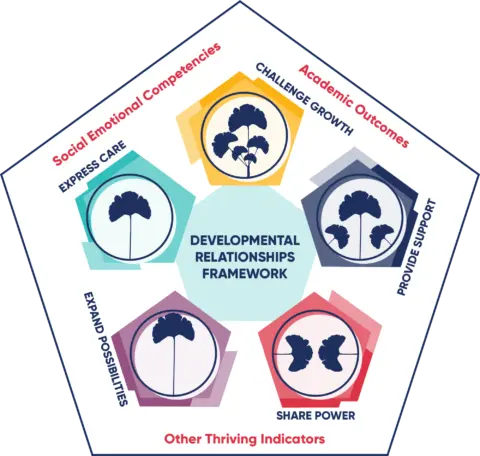
Search Institute partnered with three middle schools across rural and metropolitan districts in the greater Midwest to help strengthen the foundational relationships between teachers and students. Each school joined this multi-year, applied research project with a commitment to fostering positive relationship cultures and to receive guidance on implementing Search Institute’s Developmental Relationships Framework—a research-based approach aimed at building strong, supportive connections between young people and the adults in their lives.
The Cultural Adaptation of Developmental Relationships in Education (CADRE) project brought together school-based teams composed of teachers, staff, parents, administrators, and Search Institute researchers. Recognizing that each school brings unique assets and challenges, teams worked to design relationally-focused improvement plans tailored to their specific contexts. Search Institute provided ongoing support through professional development, comprehensive data gathering, and resources specifically created for educators, including implementation of the Developmental Relationships Survey. Partner schools were supported in using both quantitative and qualitative data—collected through surveys and interviews with students and educators—to inform their strategies and track progress.
Measuring Relationships
- Only 69% of students said they had a strong, positive relationship with an adult at their school in the fall.
- By the end of the year, nearly 80% of students reported having strong relationships with school staff.
Meeting Schools Where they Are
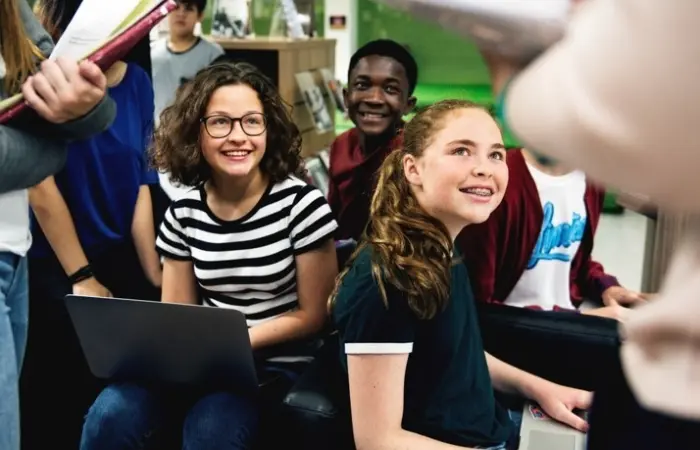
Search Institute took a flexible and adaptive approach, meeting the partner schools where they are, honoring the unique strengths of each school, and ensuring that their application of the Developmental Relationships Framework was relevant to their contexts. Each school prioritized areas most relevant to their school community. For example, one school wanted to cultivate a more culturally responsive climate by strengthening relationships with families, another focused on expanding students’ possibilities, while a third prioritized student recognition and staff-to-staff connections.
A shared goal of all school partners was ensuring each student had access to strong developmental relationships – and the time and effort they invested in growing a strong relational climate paid off! Across the three schools, only 69% of students said they had a strong, positive relationship with an adult at their school in the fall. By the end of the year, nearly 80% of students reported having strong relationships with school staff.
Developmental relationships matter. Overall, students who experienced strong developmental relationships with staff reported higher levels of self-esteem, purpose, and social-emotional competence. They felt a great sense of community and belonging, and a more positive and equitable relational climate.
Over the last two years, as Skyview has collaborated with Search Institute, chronically absent students declined by 6%, reading achievement improved by 5%, and math achievement improved by 10% I absolutely believe that our implementation of the DR framework into classroom rituals and routines contributed significantly to each of those numbers. Another fun fact? On last year's state reading test, for students who attended 90% or more school days, there was no gap in achievement between white and black students. Attendance was a larger predictor of reading success, rather than race. Unreal!
Jeff Cavett
Principal of Skyview Middle School, Oakdale, MN
The Collaborative Approach
Central to this partnership was the belief that meaningful and sustainable relational change requires identifying and addressing both systemic barriers and existing strengths. Grounded on the Developmental Relationships Framework and guided by improvement science principles, school teams reflected deeply on their contexts, collaborated on action plans, and used data to chart a path forward. Prioritizing intentional, inclusive, and equitable strategies, each team worked to ensure efforts were responsive to the lived experiences within their communities.
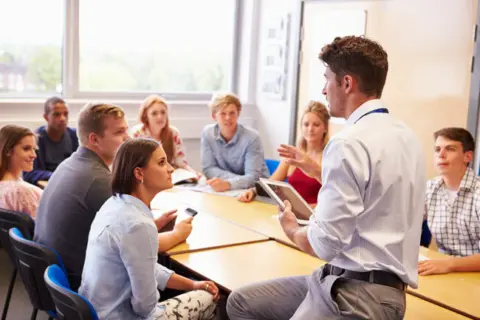
This project demonstrates how genuine partnership—built on trust, shared learning, and localized expertise—can equip schools to foster supportive, relationship-rich environments where every student can thrive.This collaborative experience is grounded on co-designed systems to strengthen student-to-adult, educator-to-educator and community relationships, is a proven approach to cultivate relationship-rich environments where each and every student has the opportunity to thrive. This research-informed, system-level, and classroom experience approach offered multiple entry points, a phased-approach and data-informed progress, all while leveraging the strengths of each school, the supporting district and school improvement plans.

Relationships Ready Schools
Learn More
measuring what matters
Understand young people’s lives through their strengths, supports, and resources and build the roadmap of actions you can take in achieving their success.
Partner Spotlight
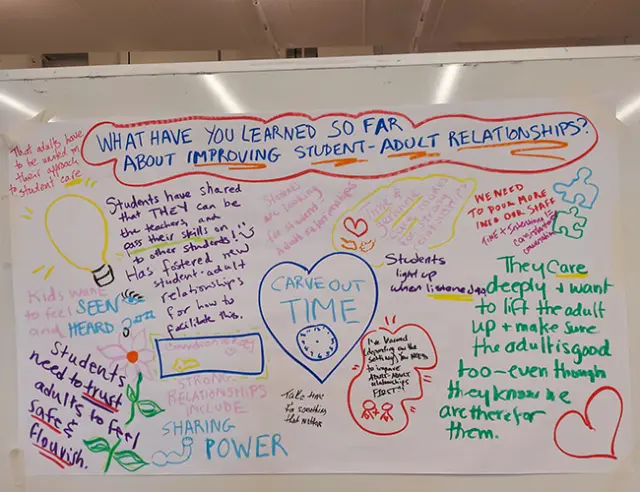
Student Success Network's bold work to strengthen student-adult relationships in six transfer high schools in New York City, with an improvement mindset approach.